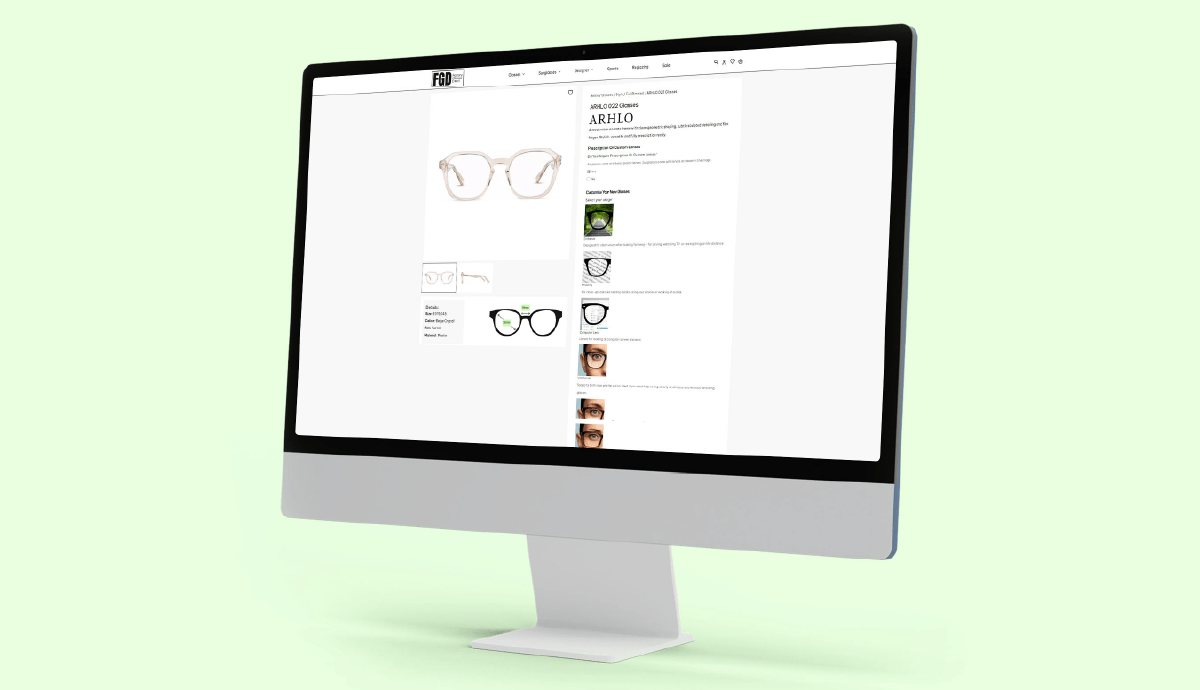
Not every product sold online is ready to buy off the shelf. Some need extra information from the customer before an order is complete, whether that’s a measurement, a specification, a personal detail, or a professional requirement. Standard WooCommerce functionality covers most of what an online shop needs, but as soon as a product depends on something the customer has to provide, the build needs to go further. This is where bespoke customisation comes in, and it’s an area GSL Media builds into eCommerce projects across a range of industries.
The same underlying problem, different products
The challenge is always the same shape, even when the detail changes. An optician selling glasses needs to capture a prescription. A furniture retailer might need room measurements before confirming an order. A print or signage business might need artwork specifications, or a choice of finish that changes the product entirely. A supplier of made to order parts might need technical detail such as size, material or tolerance. In every case, the customer is providing something personal to their order, and that information has to be collected clearly, presented back to them accurately, and carried through to fulfilment without error.
Handled badly, this becomes a barrier. Customers get confused about what’s needed, abandon their basket, or send in incomplete detail that creates extra work further down the line. Handled well, it becomes a natural part of the buying journey and a point of difference for the business.
Keeping it part of the journey, not a diversion from it
Good customisation design keeps the extra step in context, rather than sending the customer away from the product to fill in a separate form. A clear yes or no choice, or a set of options presented directly on the product page, lets the customer add what’s needed and carry on. Straightforward on-page messaging, confirming exactly what’s included and what isn’t, removes doubt before the customer commits, and cuts down on pre-sale queries landing in a support inbox.
Building on the right foundations
Rather than developing this kind of functionality from nothing, we typically build on well established WooCommerce tools suited to the type of customisation required, then focus our development time on how that functionality fits the wider site. That means matching it to the client’s branding, refining the layout for clarity, and making sure it feels like a natural part of the store rather than a bolted-on extra. Clients get the reliability of a proven plugin at the core, with a bespoke experience wrapped around it.
A case study in practice: Factory Glasses Direct
This approach is currently taking shape on the new Factory Glasses Direct website, an optical retailer whose customers frequently need prescription lenses added to their order. Rather than sending customers away from the product to a separate form, each product page includes a simple prescription or custom lenses choice. Selecting yes opens up the relevant options there and then, covering prescription type, coatings and other preferences, while a short on-page note confirms exactly what’s included with standard glasses and sunglasses so customers know what to expect before they buy.
The underlying logic runs on an established WooCommerce plugin, AcoWebs Woo Custom Product Addons, with our development work focused on styling it to match the brand and making sure it reads as a natural part of the site rather than an add-on. It’s a clear example of the wider principle: proven technology at the core, bespoke design and integration around it.
Planning for growth
Customisation needs rarely stay static. A business might start by simply capturing information manually, then later want customers to upload files directly, pull saved details from their account, or select from an expanded set of options as the product range grows. For Factory Glasses Direct, this is already mapped out as a future phase, giving customers more than one way to provide a prescription, whether that’s uploading a copy, pulling saved details from their account, or entering it manually. Planning for this from the outset means a client has a clear path to a more advanced experience later, without needing to rebuild core functionality from scratch.
Why this matters
Any online business with a product that depends on customer input, however that input is captured, faces the same fundamental question: how do you gather what you need without disrupting the buying experience. It’s a problem GSL Media has solved across different sectors, and it’s the kind of thinking we bring to eCommerce projects regardless of the industry.
If you’re planning an eCommerce site that needs to handle product customisation, personalisation, or configurable options, get in touch with the GSL Media team to talk through what’s possible.