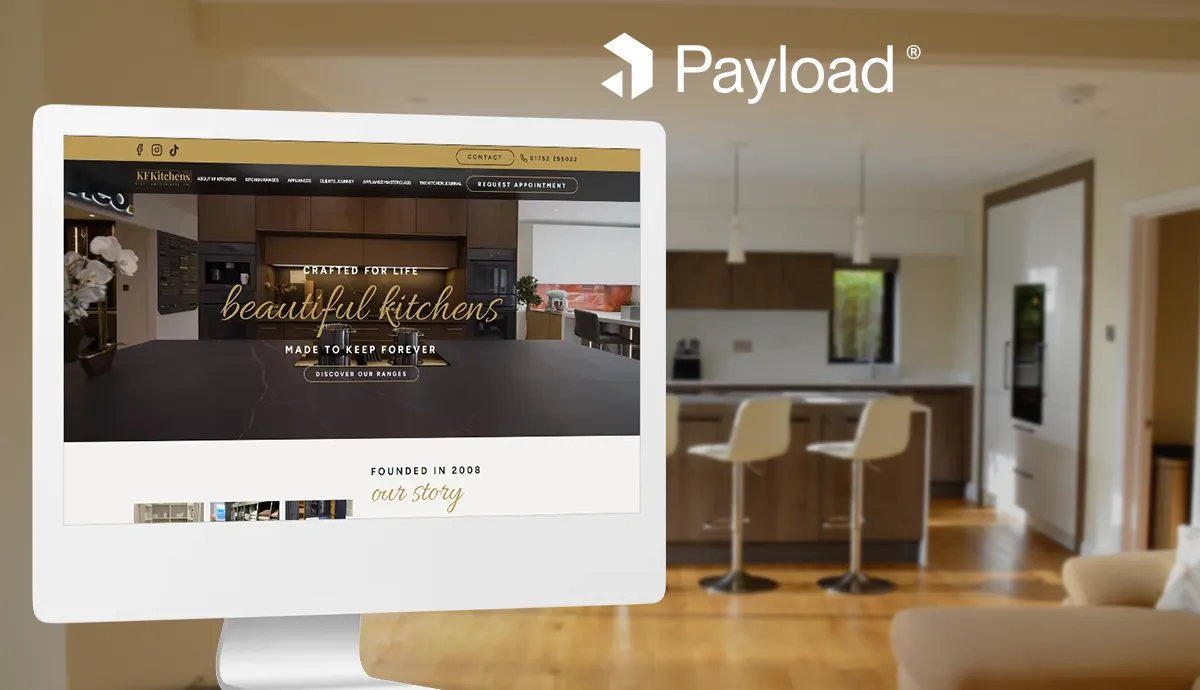
There are a lot of ways to build a website. Over the years we have worked across many platforms, from traditional WordPress and WooCommerce builds to Magento commerce projects and bespoke development. We know what those platforms do well.
We started investing seriously in PayloadCMS – and today it sits at the heart of how we deliver new websites for clients who want something genuinely built for the long term. This post explains what Payload is, why we chose it, and what it means in practice for the businesses we work with.
What is PayloadCMS?
PayloadCMS is a headless content management system built on Next.js and TypeScript. It is open source, self-hosted, and designed from the ground up to be extended. Unlike most CMS platforms that were built for a different era of the web and have been patched and plugged over time, Payload was built with modern development practices at its core.
Why We Made the Move
Ownership without compromise
One of the most common concerns we hear from clients is the feeling of being locked in. Locked into a platform, locked into a licence, locked into a supplier. Payload removes that entirely. The codebase is open source and there are no licensing fees.
Performance that actually matters
WordPress sites, particularly those built with page builders and accumulated plugins, can become slow over time. Slow sites cost businesses money. They damage search rankings, increase bounce rates, and frustrate the customers who find you. Payload, built on Next.js, delivers static and server-rendered pages that load fast by design. There is less overhead, fewer moving parts, and no sprawling plugin ecosystem to keep under control.
A proper content editing experience
Payload gives us the tools to build a content management interface that matches exactly what a client needs to manage. Editors get clean, structured fields rather than a blank canvas. That means less room for content to drift from the intended design, and a much gentler learning curve for anyone managing the site day to day.
An admin that works for the client, not against them
One of the less visible but genuinely significant advantages of Payload is what the admin panel looks like for the person actually using it. Because every Payload site is built specifically for that client, the content management interface is tailored to match exactly what they need to do. Nothing more, nothing less.
On a typical WordPress install, a client logs in and is immediately confronted with a menu containing dozens of options. Appearance, plugins, tools, settings, custom fields, SEO, backups, and a string of other items added by every plugin that has ever been installed. Most of it is irrelevant to the person whose job is simply to add a blog post or update a product page. It creates confusion, invites mistakes, and often means clients avoid the admin altogether and ask us to do things they could easily manage themselves.
With Payload, the admin is built as part of the project. If a client needs to manage blog posts, portfolio entries, and a bookings page, that is exactly what they see. The navigation is clean, the fields are labelled clearly, and every section maps directly to something real on their website. There are no redundant menus, no plugin settings they will never touch, and no risk of accidentally changing something that breaks the site.
The result is a system that clients actually use with confidence. Training takes less time, onboarding is straightforward, and the site continues to be properly maintained long after launch because managing it does not feel like a chore.
Built to grow
A Payload site is not a template. It is a properly engineered application. When a client needs something new, whether that is a new content type, an external integration, or a custom feature, we build it properly rather than forcing it through a plugin that was designed for something else. The architecture supports that kind of growth without things falling apart.
What This Looks Like in Practice
The best way to explain what Payload enables is to point to a real project.
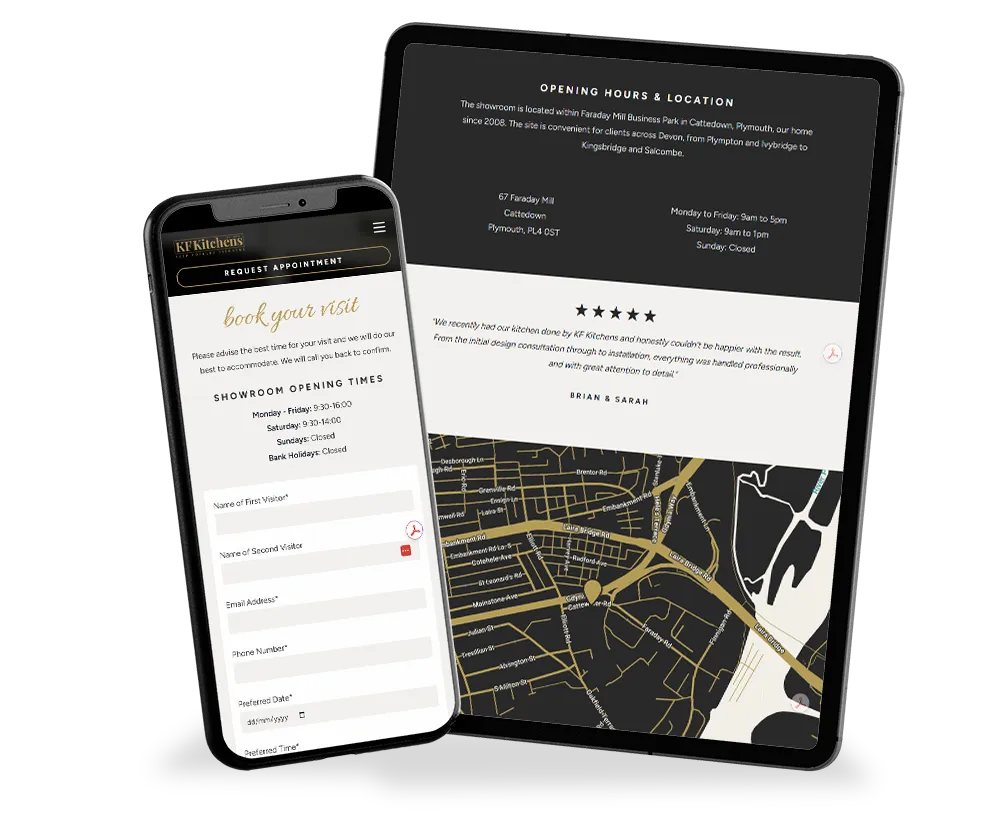
KF Kitchens is a Plymouth-based kitchen sales and installation company. They came to us with an outdated Concrete5 site that had become difficult to manage and no longer reflected the quality of their products or installations. They wanted to attract higher-end customers across South Devon and needed a platform that could grow with the business.
“The site structure was not designed to attract higher-end clientele in affluent local areas. There was no integrated review system, no professional portfolio, and limited SEO presence for the premium postcodes KF Kitchens wanted to target.”
We rebuilt their site entirely on PayloadCMS. The result includes dedicated pages for each kitchen range and appliance brand, a filterable portfolio of completed installations, a recipe section, a showroom booking system, a blog, and a Trust Index integration pulling live Google and Facebook reviews directly into the site.
The client has full control over every piece of content from day one. They can add new portfolio entries, publish blog posts, and update their kitchen range pages without any developer involvement. And because the site is built on Payload, we can extend it in any direction as the business develops.
You can read the full project overview in our KF Kitchens portfolio entry.
Is Payload Right for Every Project?
Not always, and we would not pretend otherwise. For a small brochure site where budget is the primary constraint, a well-built WordPress site can still do the job. For an established e-commerce store already running on a mature platform, a full migration may not make sense right now.
Where Payload comes into its own is for clients who are investing in a site that needs to perform well, be easy to manage, handle a reasonable amount of content, and be capable of evolving. For those projects, it is consistently the right choice.
It is also particularly strong for clients in competitive local markets where SEO and content quality matter. The architecture supports clean URLs, structured metadata, fast load times, and a content workflow that makes it practical to maintain a blog or portfolio over time.
Our Investment in the Platform
Choosing a platform is one thing. Having genuine expertise in it is another. Over time we have built custom tooling, reusable component libraries, and standardised workflows around Payload that allow us to deliver projects faster and at a higher quality than starting from scratch each time.
That investment benefits every client we build on Payload. They get enterprise-grade infrastructure and capabilities without the enterprise price tag, because we have already done the foundational work.
We continue to develop our Payload practice and stay close to the platform’s development roadmap. It is a long-term commitment, not a passing interest.
Thinking About a New Website?
If you are considering a redevelopment and want to talk through whether Payload is the right fit for your project, we are happy to have that conversation. We will give you a straight answer.
Get in touch at [email protected] or visit www.gslmedia.co.uk to find out more about how we work.