Businesses with several branches, sites or locations face a familiar problem. A single website tries to represent everywhere at once and ends up representing nowhere particularly well. Head office content dominates, local personality gets lost, and each location’s search visibility suffers because there is nowhere for genuinely local content to live. At GSL Media, one of our most recent examples of a multi-site architecture was built on Payload CMS, and it is becoming one of our most requested project types for clients running more than one site or branch.
The problem with one website for many locations
Trying to fit a group with five branches, each with its own team, its own local reputation and its own community connections into a single centralised website isn’t going to work. The individual pages become generic, buried under corporate navigation, and impossible to optimise for local search terms. Customers researching a specific location have to wade through group-wide content before finding anything relevant to them. Local managers cannot make quick, independent updates without going through a central web team. And the structure does not scale. Add a sixth or seventh location and the whole site becomes harder to navigate, not easier.
Master site, individual sites
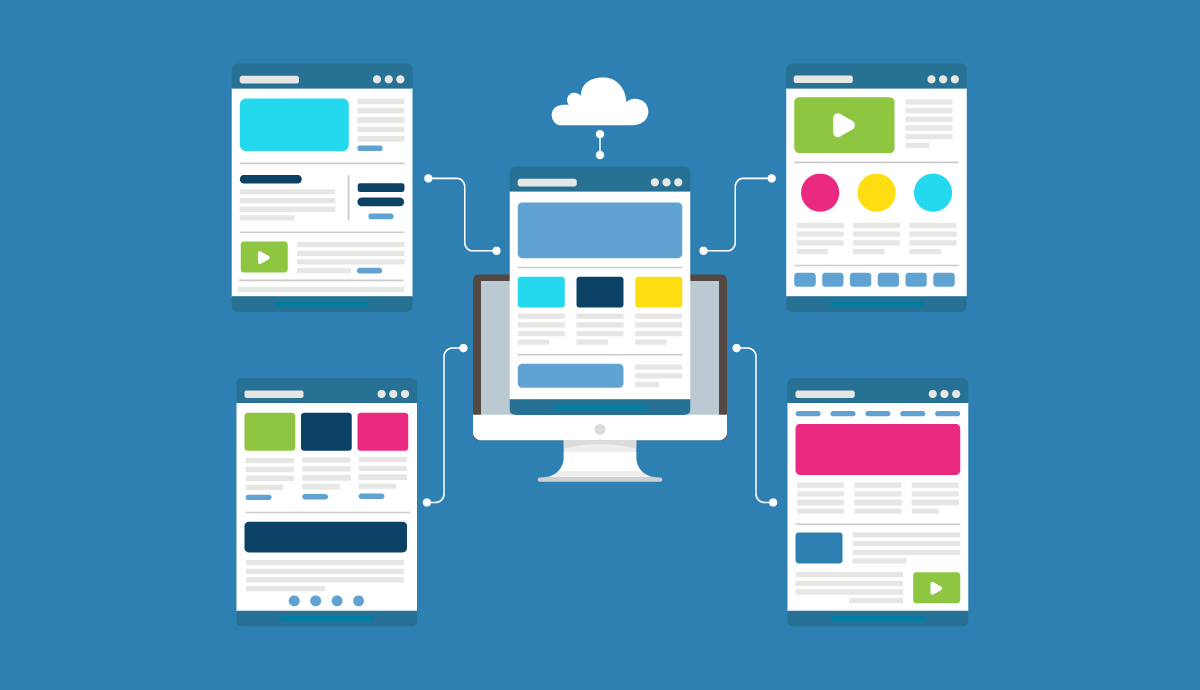
Our answer is a master site plus individual site structure, built on Payload’s multisite framework. The master site handles group-level material: company ethos and values, careers, shared customer or parent resources, and an overview linking through to every location. Each individual site then operates as its own website, on its own domain each with its own homepage and tailored content: local photography, staff profiles, facilities, community connections and a direct enquiry route to that location’s manager.
Visitors can move seamlessly between the group and local sites, whether they’re looking for wider information or trying to find their nearest location. Behind the scenes, everything shares a common structural and technical foundation, so updates, standards and security roll out consistently across the whole network without duplicating build effort for each new location.
Why Payload
We build this architecture on Payload CMS because it gives clients enterprise-grade capability, flexibility and scalability, without the constraints of legacy platforms like WordPress. Payload provides a modern, flexible foundation for building fast, secure and scalable digital experiences. Its open-source approach gives us the flexibility to tailor the platform around each project, while making it easier to evolve and expand as your needs change.
For a multi-site build specifically, Payload’s flexibility matters most. Custom post types let us build functionality such as a careers hub with structured job listings, or a resource hub organised by category, all manageable by the client without developer involvement. Each site in the network can be handed to a local manager with training, giving them genuine day-to-day control over their own content, while the wider group retains consistent branding, navigation standards and technical performance.
A real example: Devon Nurseries
We have recently applied this approach for Devon Nurseries, a group of five nurseries across Devon with plans to grow to ten locations. Their previous website was a single, centralised WordPress site that could not give any individual nursery its own identity, could not be optimised for local search, and gave nursery managers no way to update their own content.
The new structure gives Devon Nurseries a master site for group information, careers and parent resources, and a standalone site for each nursery with its own domain, local photography and messaging, staff profiles, Ofsted highlights, and a direct contact route to that nursery’s manager. The build was delivered in phases, starting with the master site and one pilot nursery, so the approach can be refined before it is rolled out across the full network, including future locations as the group expands.
The payoff
A multi-site build on Payload gives our clients the best of both worlds: distinct, locally relevant websites that properly reflect each site or branch, sitting on a shared technical foundation that is fast, secure and easy to extend. For any organisation with multiple locations weighing up whether to invest in this kind of structure, the sign to watch for is simple: if your current site cannot let each location stand on its own, it is probably holding your growth back.
You can see how this played out in practice in our Devon Nurseries portfolio entry, or get in touch with the GSL Media team to talk through a multi-site build for your own business.